BOLD Talent Andu Masebo in the studio.
For this instalment of Bold Talent, we spend time with Andu Masebo, a designer whose practice fluidly moves between concept and craft. His work exists in a space where thinking and doing are inseparable, each informing, disrupting, and deepening the other.
Responsibility, restraint, and openness.
Visiting his studio reveals an approach grounded in curiosity: materials sit alongside sketches, half-resolved forms meet fully realised ideas, and the boundary between experimentation and intention feels porous by design. For Andu, progress emerges not from linear steps, but from an ongoing conversation between hand and mind, a loop that keeps his practice dynamic, responsive, and alive.
As he prepares to exhibit as part of ‘No.1 Common’ at 3daysofdesign, we discuss how storytelling operates as structure, how collaboration invites productive uncertainty, and what it means to approach design with responsibility, restraint, and openness.
Moving between designer and maker.
Justified: Your practice shifts between designing and making, with each discipline feeding the other. How does moving between these roles shape the ideas you generate?
Andu: Designing things I make and making things I design, the two are constantly informing each other. I’m always learning how one process reshapes the other. That loop is where ideas happen. It creates a kind of forward motion: you try something, learn from the material or form, and let that change the direction of the design. It’s less about switching hats and more about letting both roles exist at the same time.
Justified: Storytelling sits at the heart of your work. What strategies do you use to communicate the narrative behind each piece?
Andu: For me, story is the strategy. I’m interested in how things gain meaning beyond monetary value, how a piece can be rich in context, rooted in a truth, or connected to a lived experience. I want the narrative to feel embedded in the work, not added on afterwards. If people can understand why something exists, or what it’s responding to, then the story is doing its job.
Justified: You’re exhibiting in the ‘No.1 Common’ project at 3daysofdesign. How do collaborative projects like this expand or challenge your personal design language?
Andu: I love the potential of jeopardy as a creative force. Collaboration creates that naturally, there’s unpredictability, and you have to leave space for the experience of the thing to change the thing itself. The people in the room become part of the process. That sense of elasticity, of not knowing exactly where something will end up, is something I value.
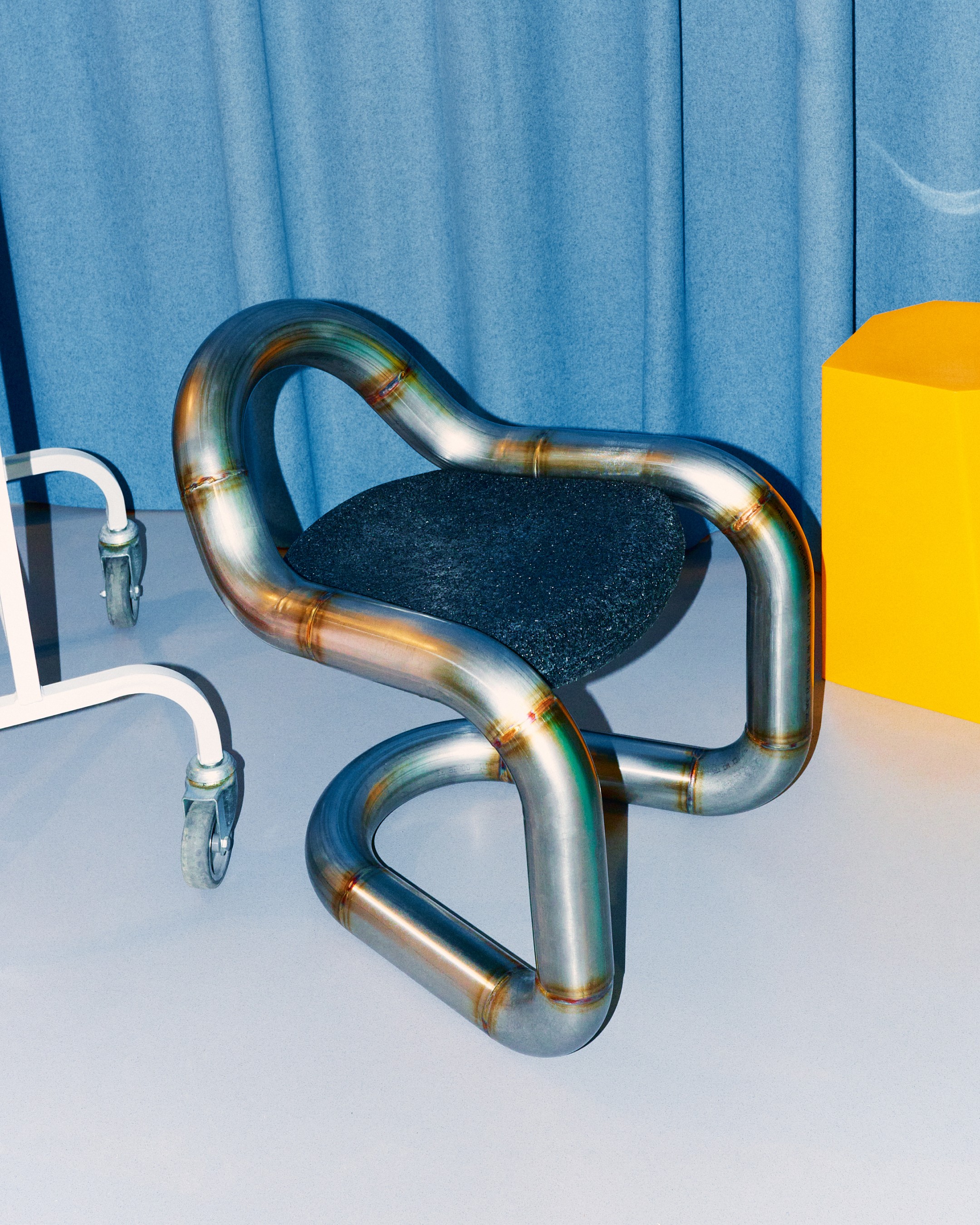
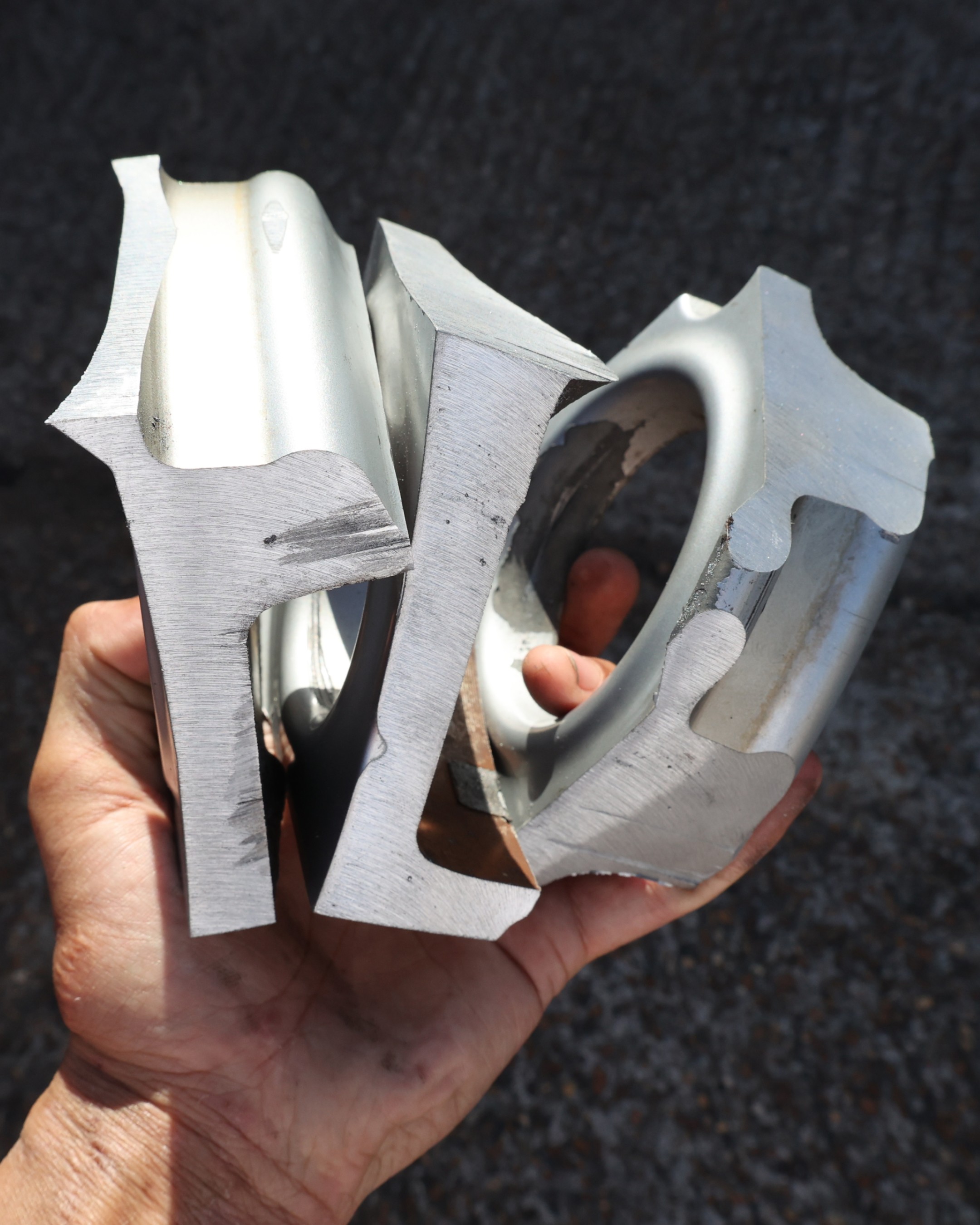
Imagery from Andu's recent works.
“Story is the strategy. I’m interested in how things gain meaning beyond monetary value.”Andu Masebo
Responsibility and material choice.
Justified: When working on a piece, how do you decide when to hold back, when to push further, and ultimately, when something is finished?
Andu: I’m drawn to work that unfolds beyond itself. For me, the full stop is when something feels ready to bring about a new experience for someone else. It’s less about perfection and more about readiness, a sense that the piece can now live outside the studio and start its own journey.
Justified: What role does social or environmental responsibility play in your material choices?
Andu: Everything is linked, the social, the environmental, the practical. The way I can genuinely engage with positive change is by adopting a humane approach to the human condition. That means considering impact, but also intention. If the process respects people, materials, and context, then it’s moving in the right direction.
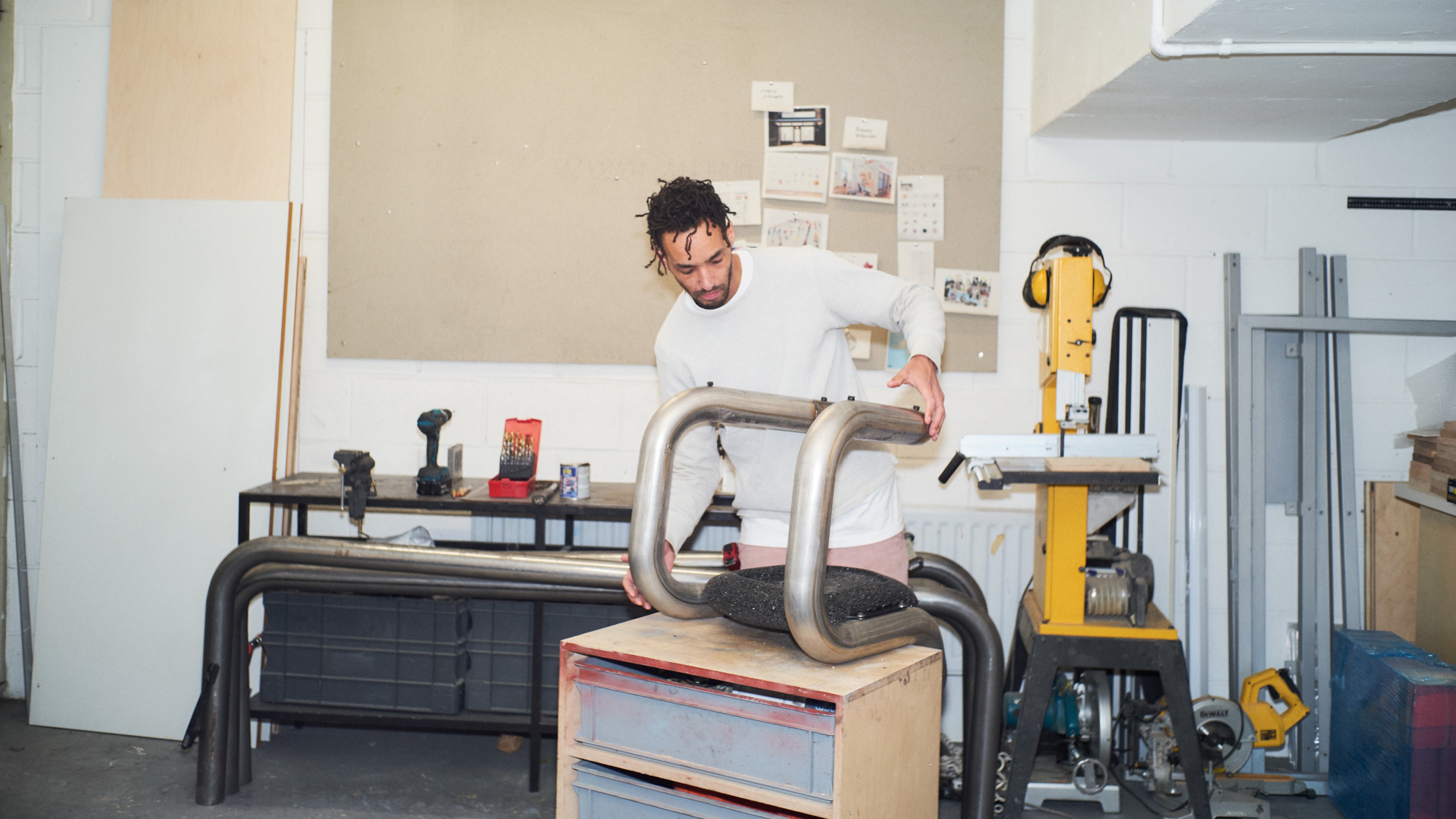
Andu Masebo in his studio.