The New Role of the Junior Designer
It’s about curiosity.
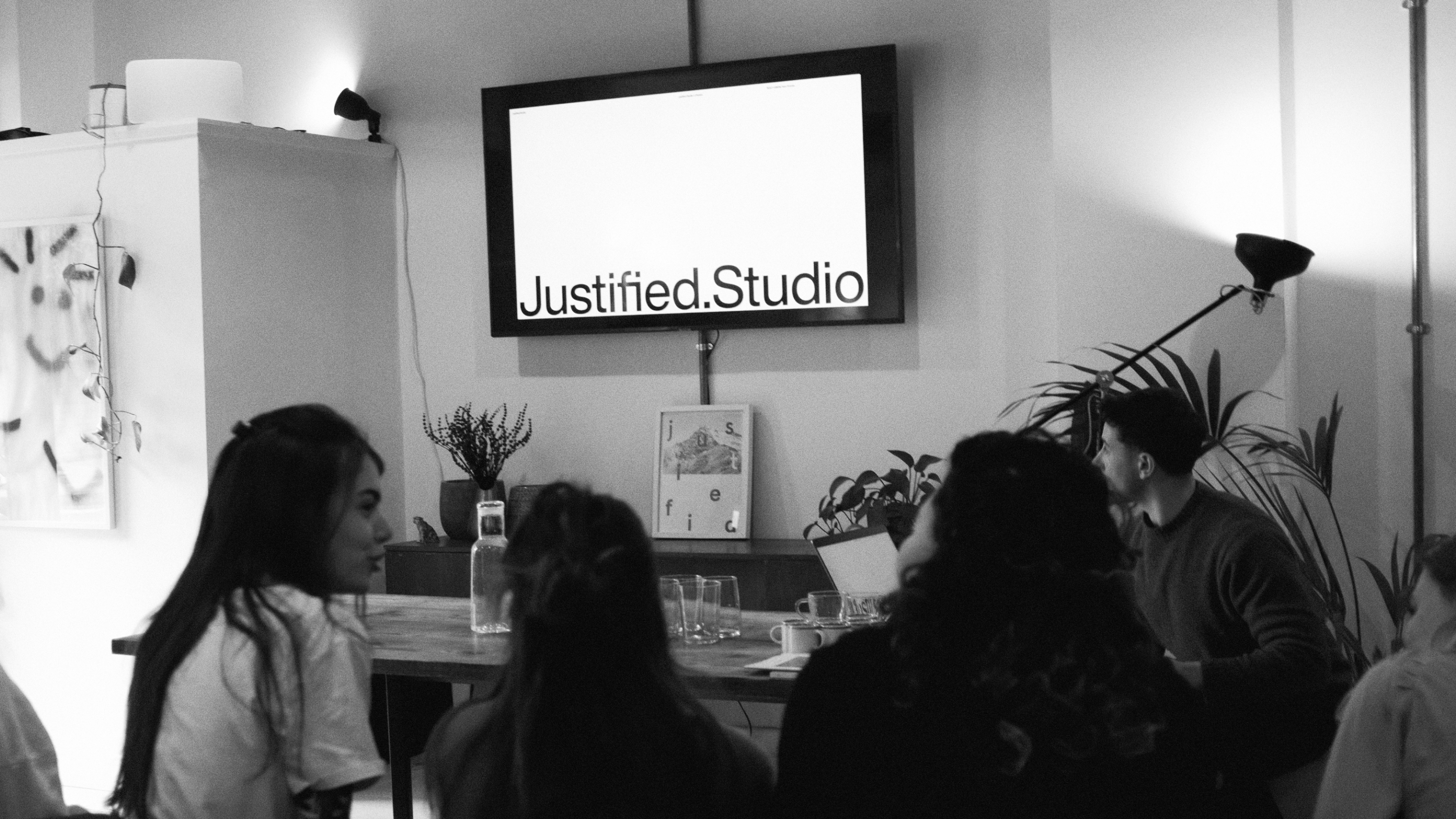
UAL Chelsea College of Arts Students at Justified Studio
We had the pleasure of welcoming students from UAL Chelsea College of Arts, second and third years, into Justified Studio. What started as a conversation about entering the industry quickly turned into something bigger: a discussion about what it means to be a junior designer today.
Because the role has changed.
For a long time, junior designers were expected to support. Production-heavy tasks. Rolling out layouts. Building files. Learning the ropes while others set the direction. But the landscape is shifting rapidly.
AI is absorbing much of the traditional production load, automating parts of the process that once defined early careers. And while that might sound intimidating, we see it as something else entirely. It creates space. Space for junior designers to do what they are uniquely positioned to do: experiment, question and shape culture.
Junior designers have always brought something powerful into studios: fresh perspective. But today, that perspective matters more than ever. The brands we work with are constantly trying to connect with younger audiences. They want relevance. They want cultural understanding. They want authenticity. And the people best placed to bring that into the room are the designers who are closest to that culture.
This generation of creatives grew up inside fast-moving digital culture, memes, emerging platforms, new aesthetics, and evolving subcultures. That proximity gives them an instinct for what feels new, interesting and relevant.
In other words, they are the tastemakers.
Not in a superficial way, but in a way that drives exploration. They bring the energy that pushes studios forward. They challenge the expected. They ask “what if?” At Justified, we believe the role of the junior is no longer just to support the work. It’s to energise it.
“The future of our industry is already forming in the minds of the next generation of designers. Our job is to create the environment where that curiosity can thrive. And if the conversations we had with these students are anything to go by, the future looks incredibly exciting.”Joshua Ogden - Creative Director
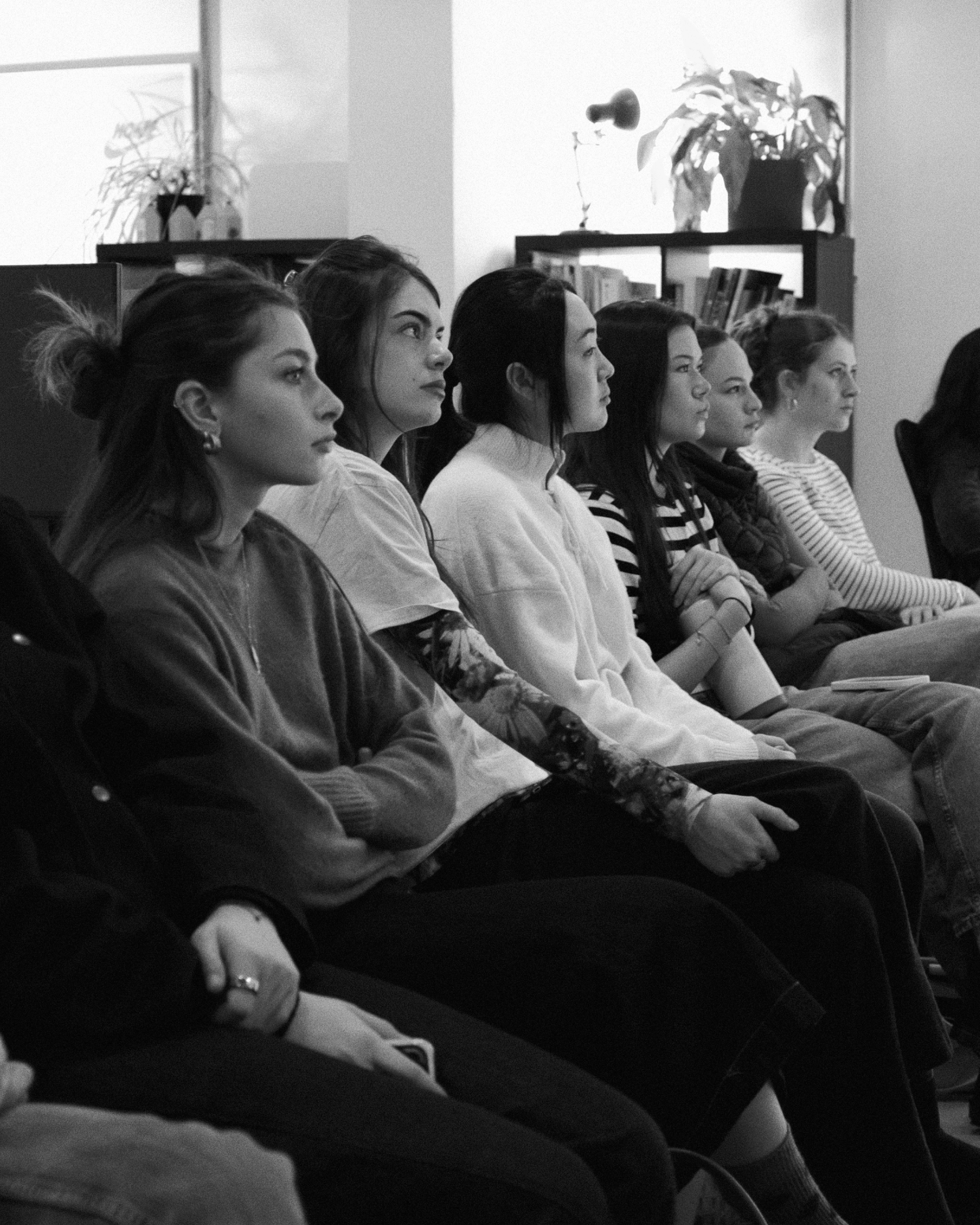
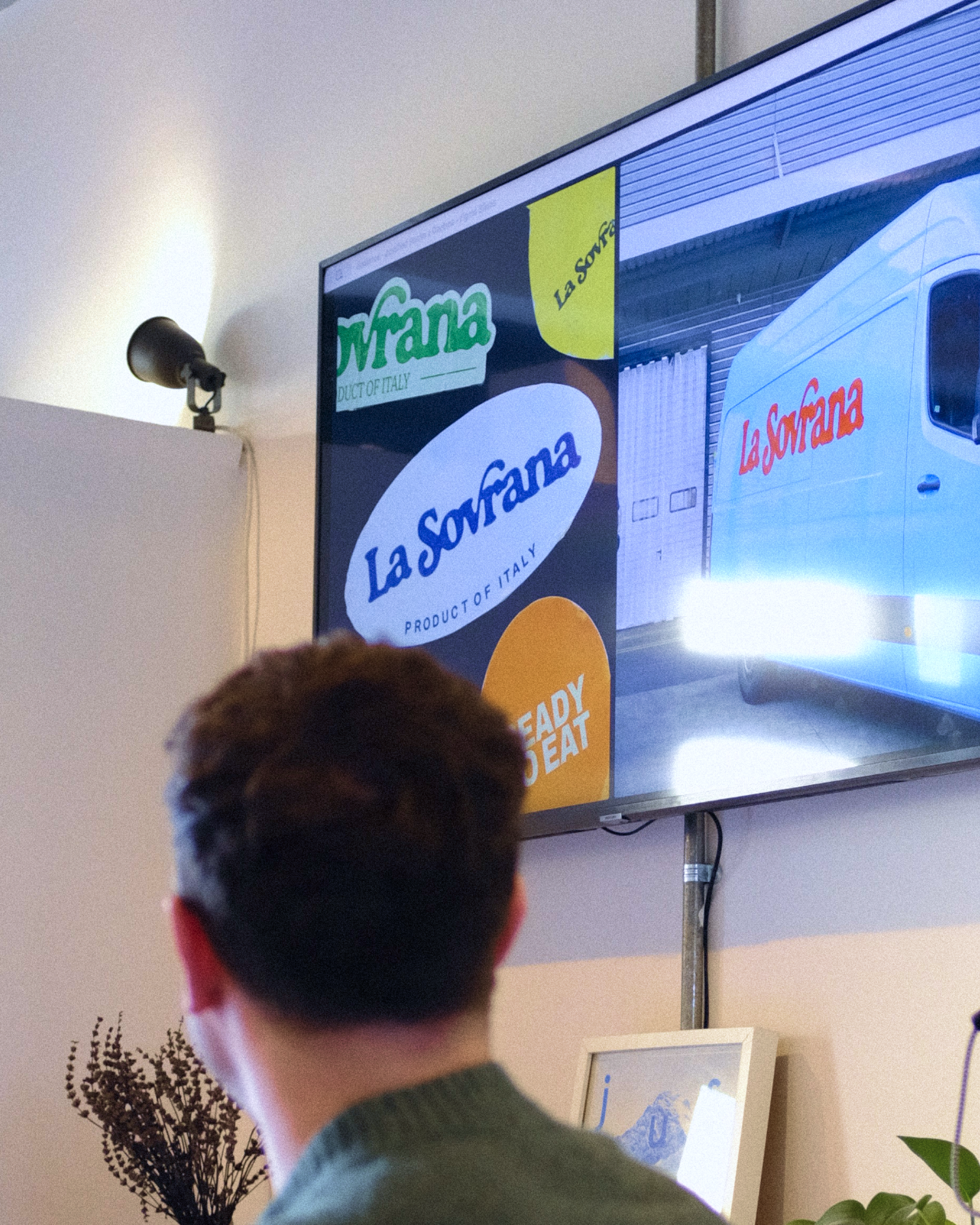
A discussion about what it means to be a junior designer today.
Curiosity Over Comfort
The most valuable quality a junior designer can bring today isn’t perfect technical execution. It’s curiosity.
Curiosity about culture.
Curiosity about technology.
Curiosity about how brands communicate and how audiences respond.
Because the industry is evolving quickly, and the designers who will shape its future are those who stay curious enough to question the norms.There has never been a more important time to experiment. To test ideas. To disrupt conventions that may have worked for years but no longer reflect the world we live in.
During the session, we covered many of the questions that naturally come up when you’re about to enter the industry:
- How do I get a job in the design industry?
- Agency, freelance or in-house, what’s the difference?
- What makes a strong portfolio?
- Should I stay broad or specialise?
- What does the future of the industry look like?
- What value do junior designers bring?
- How is university different from “The Industry”?
The honest answer to many of these questions is that there isn’t a single path anymore. Careers in design are becoming more fluid. Some people will move between agencies, freelance work and in-house teams throughout their careers. Others will carve out entirely new roles that didn’t exist a few years ago. But one thing is consistent: the people who stand out are those who bring original thinking and genuine curiosity.
If anything, the rise of new tools and technologies means this generation of designers is entering the industry at a moment of real opportunity.
Production will become faster. Workflows will evolve. But creativity, the ability to see something differently, will only become more valuable. And that’s where junior designers can lead.
Not by waiting to be told what to do, but by bringing ideas, experiments, cultural insight and fresh perspectives into the room.
Welcoming the Chelsea students into the studio reminded us of something important: the future of our industry is already forming in the minds of the next generation of designers. Our job is to create the environment where that curiosity can thrive.
And if the conversations we had with this group are anything to go by, the future looks incredibly exciting.