
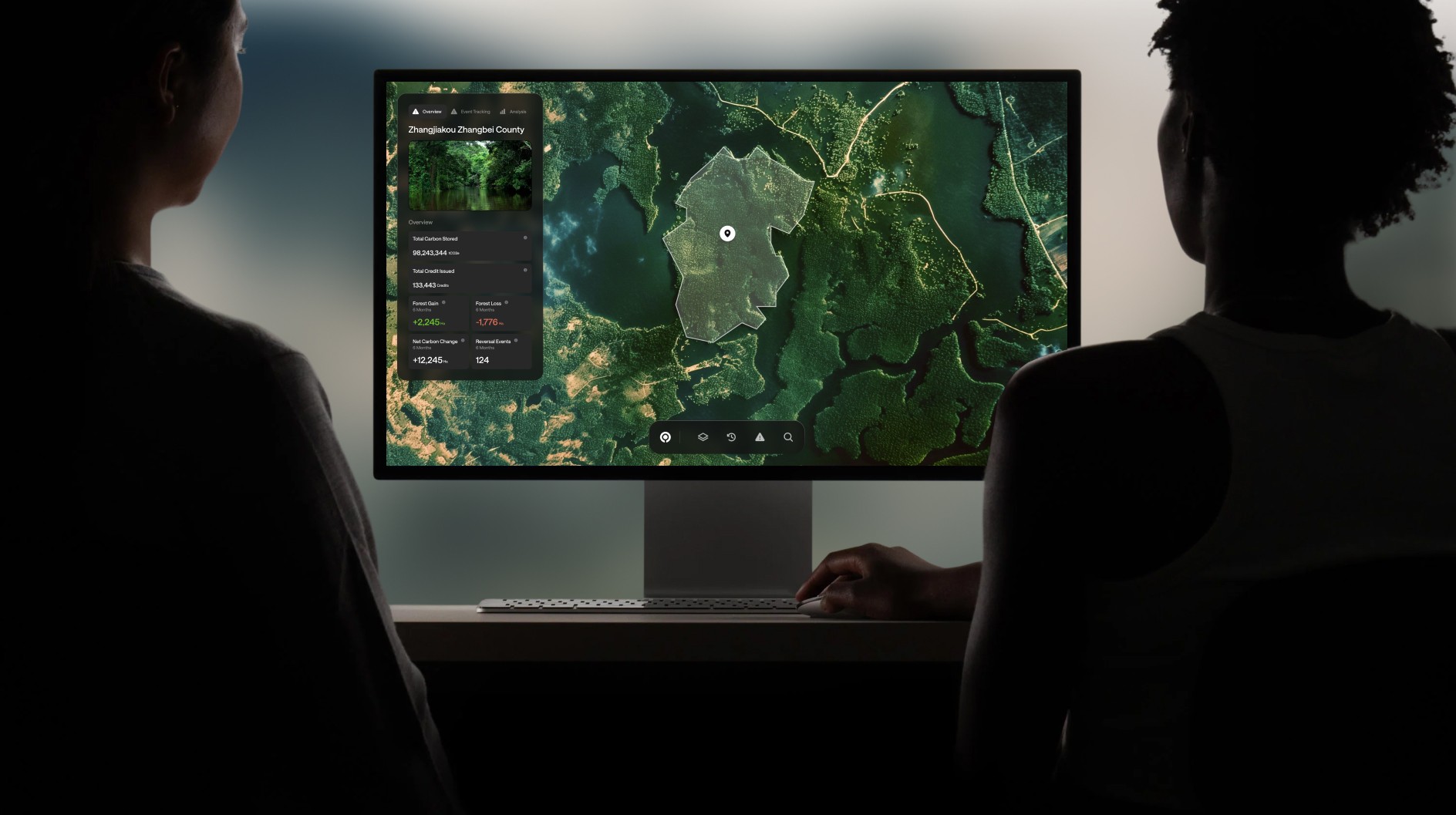
AI is making it possible to process more data and generate answers faster than ever. But in many industries, the challenge isn’t a lack of data. It’s that the underlying information is fragmented, inconsistent and difficult to verify.
We recently encountered this challenge while working with Treefera, an AI-powered platform using satellite data and advanced analytics to bring greater transparency to environmental data and carbon markets.
Treefera is changing what’s possible at the data layer. Our challenge was to make that intelligence equally powerful at the experience layer. As AI products become capable of interpreting increasingly complex information, product design has a new responsibility: not simply to present an answer, but to help people understand where it came from, interrogate the evidence behind it and confidently act upon it.
The question becomes: how do you design a product that turns uncertain information into confident decisions?
Trust isn’t a visual treatment
There is a familiar visual language for trust in digital products: clean typography, restrained colour, lots of space, serious-looking dashboards. These things can make a product look credible. They don’t necessarily make it trustworthy.
In complex digital products, trust is structural. A user needs to understand where information came from, what sits behind a conclusion and, when necessary, be able to interrogate it further.
This becomes particularly important with AI. Traditional software generally asks users to trust a process they can understand: I do X, therefore Y happens. AI products can interpret enormous quantities of information and arrive at conclusions that would be impossible for a person to reach manually.
The better the machine becomes at giving us answers, the more important it becomes to design the journey from answer back to evidence.
Designing Treefera
Carbon markets are an extreme example of this challenge. Understanding what is actually happening across enormous areas of land, forests and supply chains has historically relied on information that can be fragmented, inconsistent and difficult to verify.
Treefera is changing that by bringing together satellite imagery, environmental data and AI-driven analytics to give organisations a clearer picture of environmental assets, compliance and risk.
Our role was to translate that technological complexity into a clear, scalable digital product experience, spanning product UX, interface design, data visualisation and a design system capable of evolving alongside the platform.
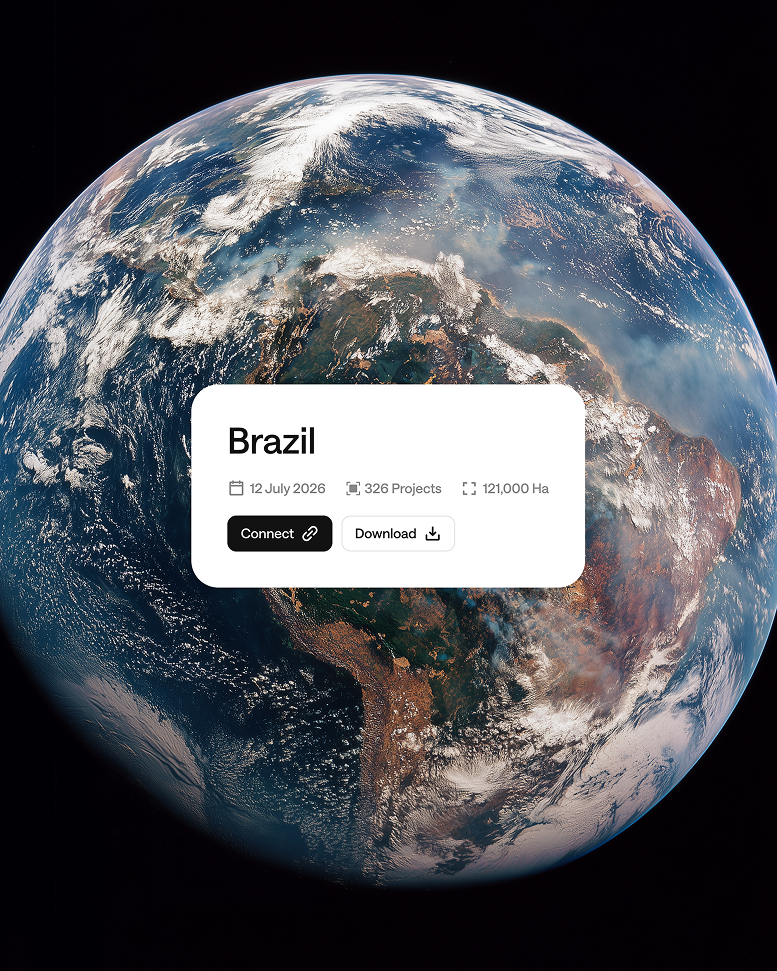
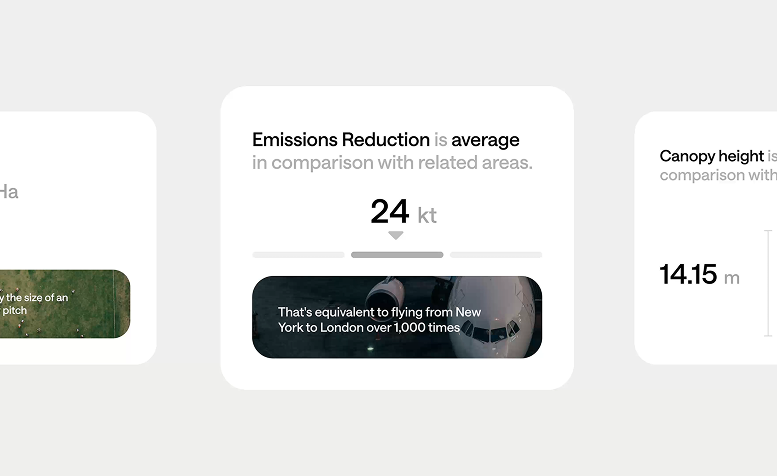
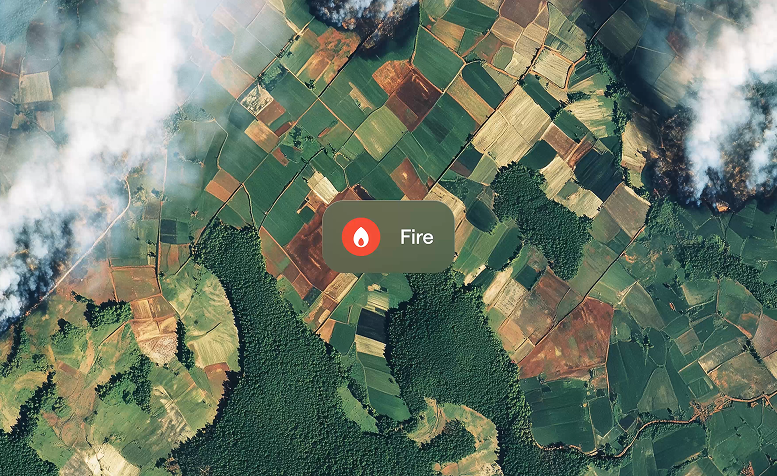
The challenge wasn’t simply how do we display all of this data? It was: how do we turn extraordinary complexity into something someone can confidently make a decision with?
01. Design around decisions, not datasets
When a platform has access to huge amounts of information, there is a temptation to expose as much of it as possible. More data can feel like more value. Often, it creates the opposite.
Users don’t open a platform because they want to experience the sophistication of its underlying data architecture. They arrive because they need to understand something, assess something or make a decision.
So rather than beginning with what data can we show?, start with what does this person need to decide? Then ask what they need to know to make that decision confidently.
The objective of the interface isn’t to demonstrate complexity. It’s to absorb it.
02. Create a path from clarity to depth
Complexity shouldn’t necessarily be removed. It should be revealed at the right moment.
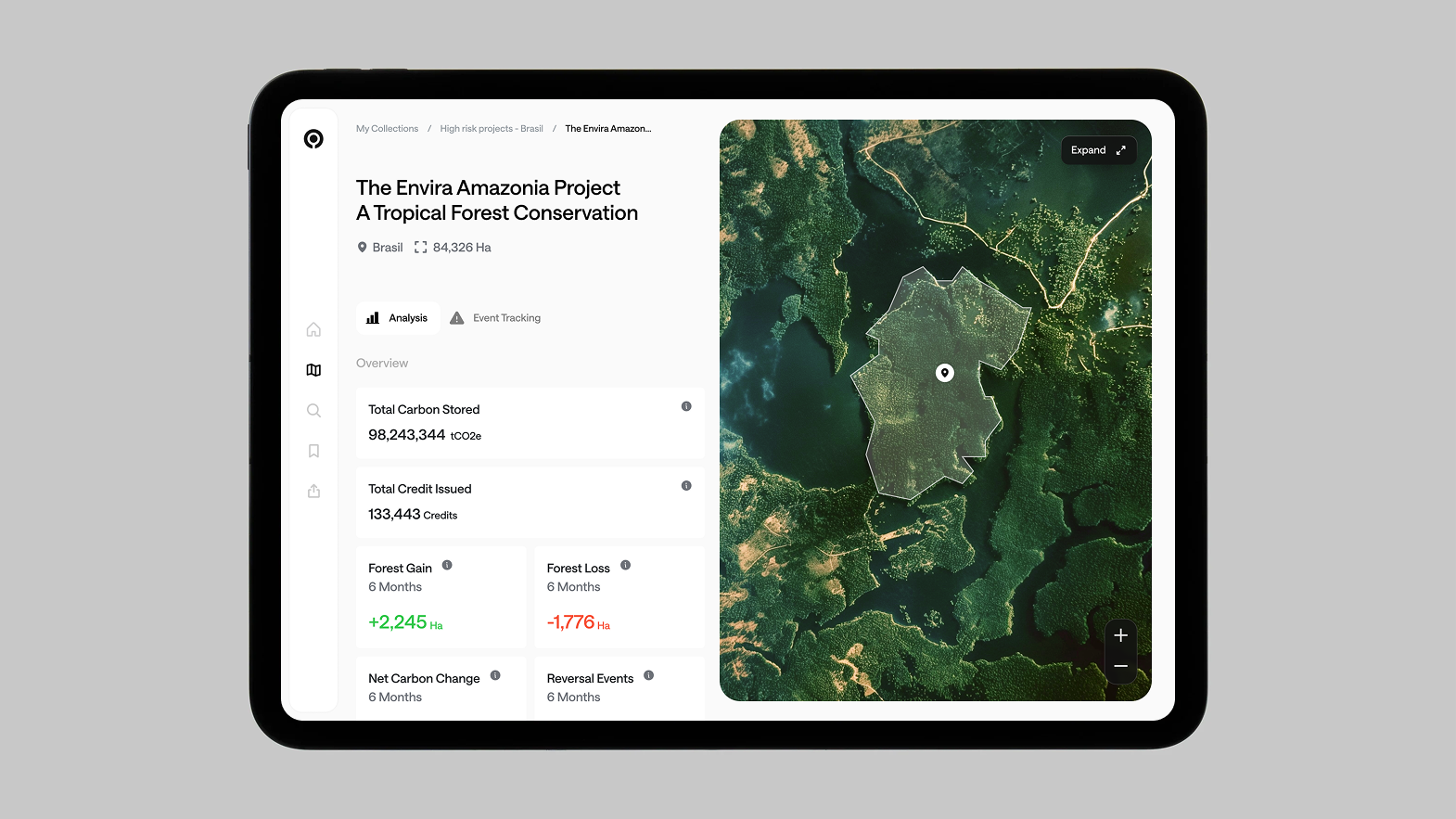
For Treefera, that meant allowing users to begin with a clear view of what mattered, while retaining the ability to investigate the information beneath it. A user might first need to understand that an asset carries a particular level of risk, then why, and finally interrogate the individual data points or evidence contributing to that assessment.
Those different levels of information don’t need to compete for attention simultaneously. Instead, the interface can create a journey from answer to context to evidence to detail.
Good complex-product UX creates a path from clarity to depth. The simplicity comes from the experience, not from pretending the underlying system is simple.
03. Design for uncertainty, not artificial certainty
There is a natural desire to make technology feel authoritative. But an interface that presents every output with absolute confidence can make a sophisticated system less trustworthy.
Not every dataset has the same reliability and not every AI-generated conclusion carries the same degree of confidence. Good AI product design needs ways to communicate that.
That might mean showing provenance, confidence levels, supporting evidence or historical change. The objective isn’t to make the technology appear uncertain. It’s to make its reasoning more legible.
Trust doesn’t come from pretending uncertainty doesn’t exist. It comes from helping people understand it.
04. Make complexity explorable
There is an important difference between a dashboard and a decision-making tool. A dashboard displays information; a decision-making tool allows people to interrogate it.
For Treefera, filtering, data visualisation and navigation weren’t secondary interface features. They were fundamental to how users could develop confidence in what they were seeing.
A financial institution assessing exposure may have a very different question from an auditor investigating compliance or a landowner understanding an asset. The product needs to accommodate those different paths without becoming a different product for every audience.
This is where information architecture becomes as important as interface design. The best complex products don’t simplify everything into one answer. They make complexity navigable.
05. Use consistency to reduce cognitive load
Design systems are often discussed in terms of efficiency and scale, but there’s another benefit that matters enormously in complex products: predictability.
When users are dealing with unfamiliar information, the interface itself shouldn’t constantly require interpretation. Components should behave consistently, hierarchies should remain familiar and similar information should be represented in similar ways. Every interaction a user doesn’t have to relearn gives them more capacity to concentrate on the information that actually matters.
For Treefera, we built a scalable system of reusable components that could accommodate an evolving product and new forms of data without continually reinventing the experience. As the underlying technology becomes more sophisticated, the interface can remain coherent.
That consistency isn’t simply good design-system practice. In a complex product, it becomes part of how trust is built.
The interface is part of the intelligence
There is a tendency with AI products to think of the intelligence as something that exists behind the interface. The model is intelligent. The data is intelligent. The algorithm is intelligent. Then design packages the output.
We think that underestimates the role of product design.
An extraordinary insight that can’t be understood, interrogated or acted upon has limited value. The interface determines how that intelligence becomes useful to a human being.
Following its launch at New York Climate Week, Treefera reported a 39% improvement in carbon-data accuracy against existing baselines. The company subsequently raised $12 million in Series A funding and has attracted organisations including JP Morgan, EY, Maple Credit and Anew Climate.
The technology is sophisticated. But sophistication isn’t what the user should experience. They should experience clarity.
As AI products become capable of interpreting more complex information, this challenge will only become more important. Better intelligence alone isn’t enough. Product design has to make that intelligence understandable, interrogable and useful. Don’t design AI to appear intelligent. Design it to turn better intelligence into better decisions.